
A community does not form because events keep happening. It forms when people feel there is a reason to return, connect, and contribute.
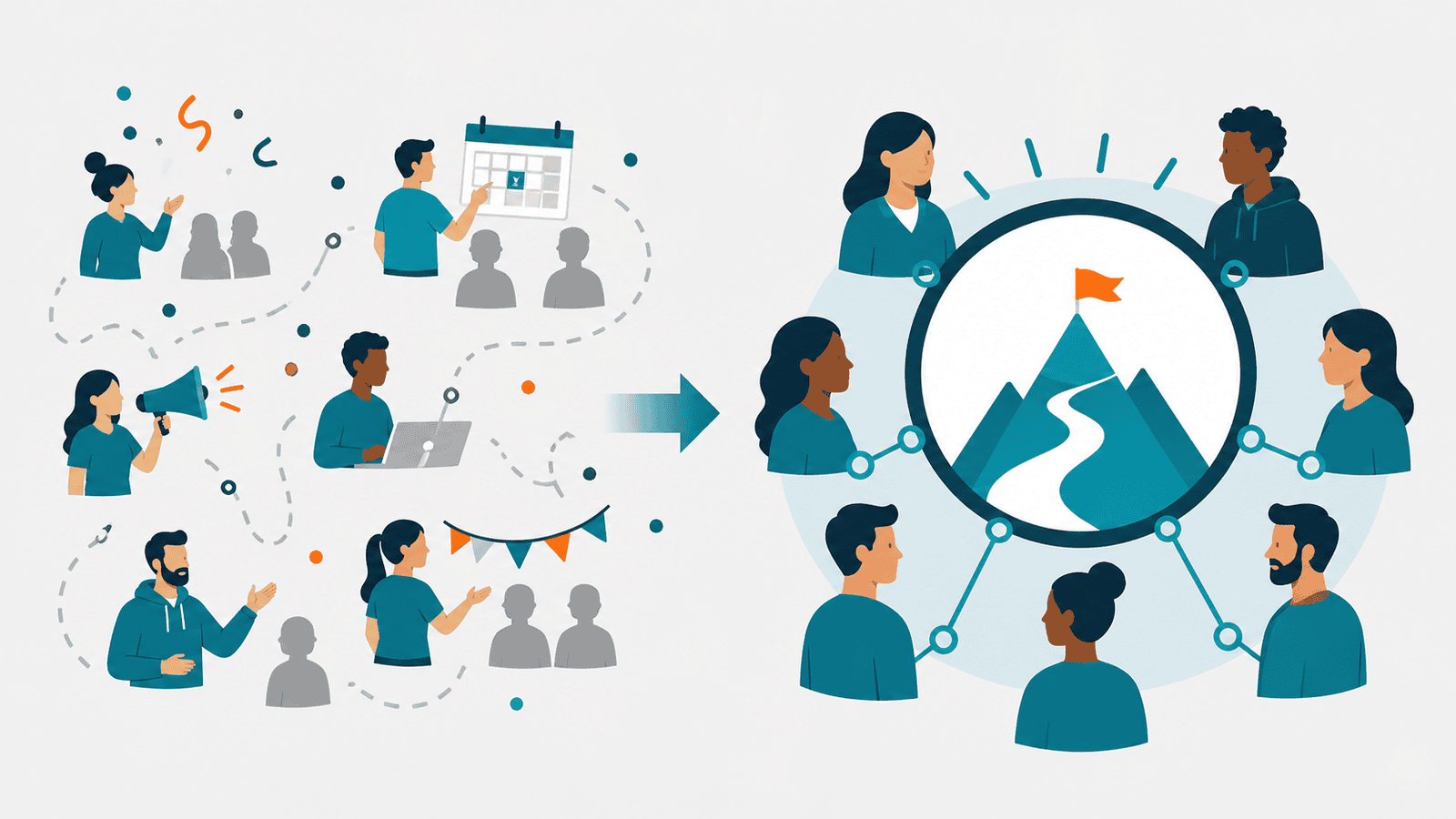
“Programming can keep a calendar busy. Purpose is what makes a community worth returning to.”
Where many community efforts go off track
They begin with activities instead of reason. The question becomes what can we host next, rather than why should this group exist in the first place.
That leads to motion without center. There may be good sessions and decent attendance, but people do not build attachment. They consume and move on.
What real community usually has
- A clear center of gravity. A mission, a tension, or a problem worth gathering around.
- An exchange that goes beyond passive attendance.
- A feeling that people are part of an ongoing journey, not one-off programming.
- A host or curator that protects relevance and trust.
- Enough continuity that participants feel progress, memory, and return value.
Without those elements, the initiative often stays in the events business rather than becoming a real community.
Why purpose matters so much
What the host role really is
A host is not only an organizer. In a real community, the host is also a steward of relevance. That means choosing the right tensions, protecting signal quality, keeping the tone constructive, and helping the group feel that the conversation has direction.
That is why community building is close to editorial work. It is not simply logistics.
A practical distinction
Programming asks: what can we schedule? Community asks: what shared journey are we helping people be part of?
That difference changes everything. It influences how topics are chosen, how members are recruited, how follow-up happens, what gets documented, and how value compounds over time.
Mistake to avoid
Do not mistake attendance for attachment. People can attend and still feel no real pull to return.
Questions worth asking
What is the shared reason this group should exist?
What would make participants feel they belong rather than merely attend?
How are we creating continuity between interactions?
What are people gaining by being part of this over time?
