
ABM loses strength when teams treat accounts as targets but fail to build relevance, trust, and useful conversations.
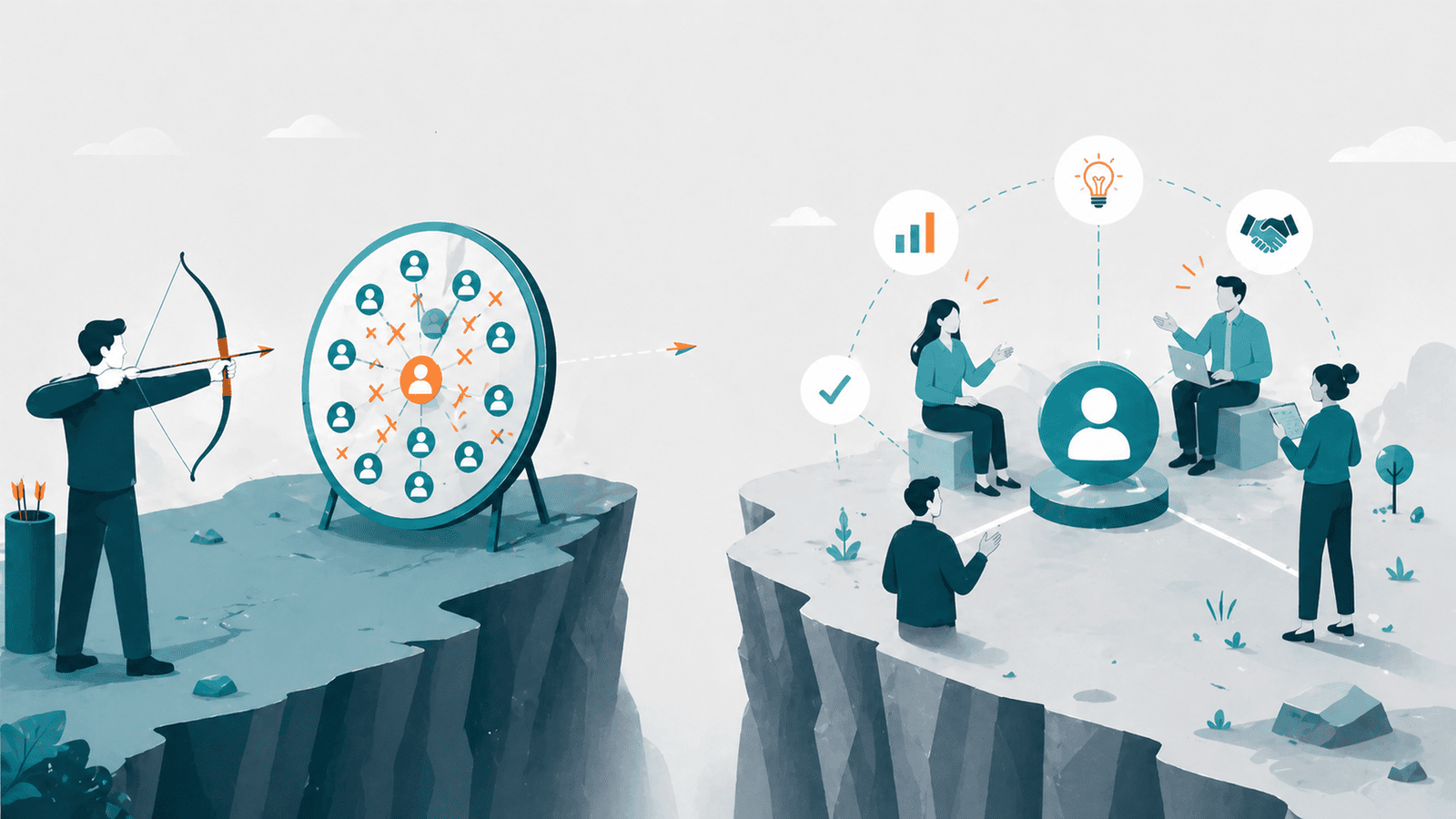
ABM often starts with good intent.
Focus on the right accounts. Stop spreading effort too thin. Coordinate sales and marketing. Personalize outreach. Build stronger paths into high-value opportunities.
That all makes sense.
But somewhere along the way, ABM can shrink.
"ABM gets weaker when it treats accounts like targets instead of relationships."
It becomes a list.
Then a set of ads.
Then a sequence.
Then a dashboard showing account engagement.
Targeting is not engagement
Relevance has to be earned account by account
Move from account list to account learning
It is also why the difference between engaging an account and staying relevant to it matters. Engagement can spike. Relevance has to be maintained.
ABM should create account learning on both sides.
The account should learn something useful from you.
You should learn something useful about the account.
If the program only pushes messages outward, it is not fully account-based. It is account-targeted.
There is a difference.
A practical way to improve ABM is to add a relationship hypothesis for each priority account or account cluster.
Not just, “They need our solution.”
A real hypothesis.
What pressure might they be under?
Who is likely feeling it first?
What would make the issue politically hard inside their organization?
What are they likely tired of hearing from vendors?
What proof would lower perceived risk?
What peer discussion would they find worth their time?
What existing customer story would feel relevant, not forced?
What question could we ask that would make them pause?
Questions worth asking
- Are we building relevance or simply increasing touches?
- What would make the account feel understood?
- What do we learn from accounts that do not respond?
